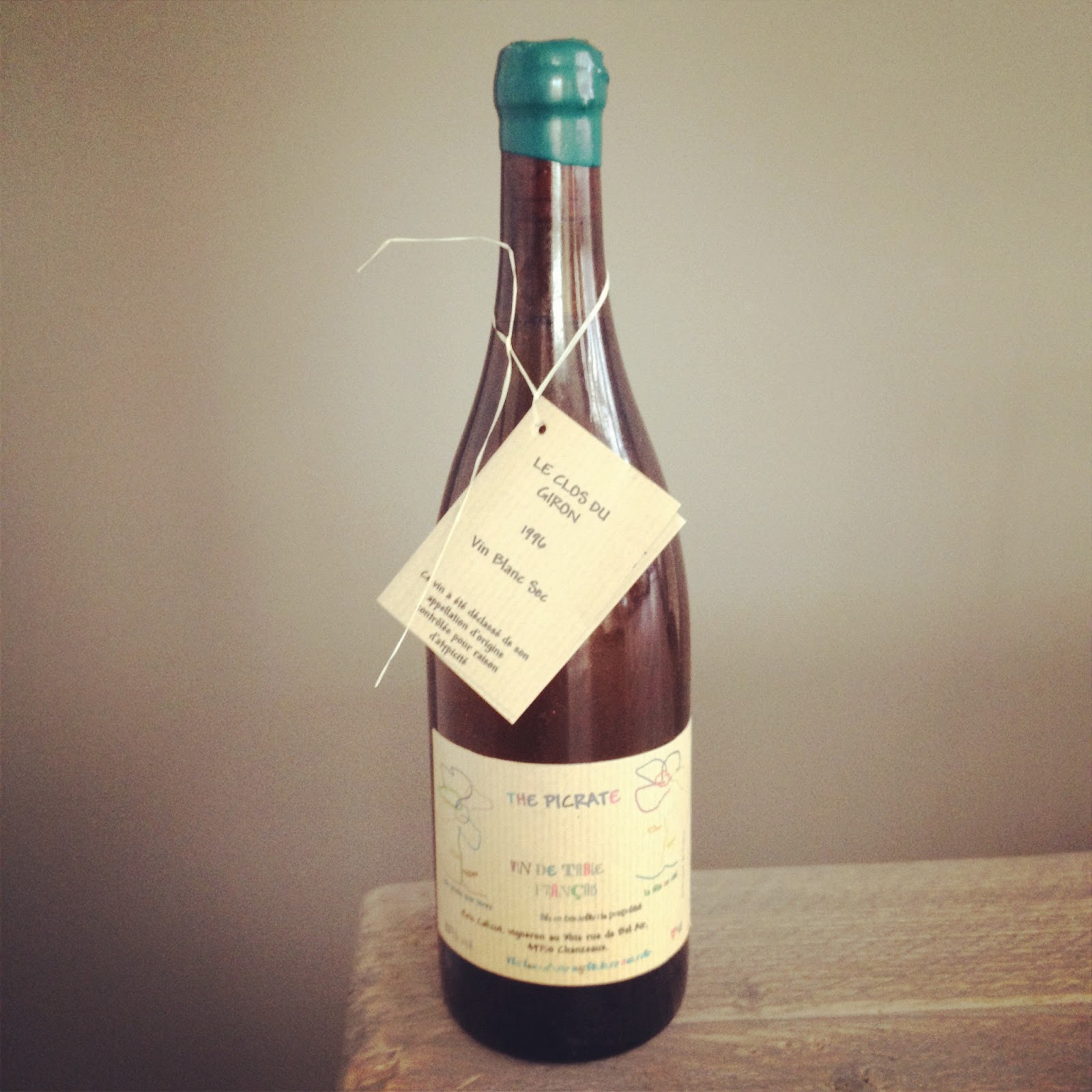
I would like to talk about the other 0.001% of wines made from the forgotten
grapes which never made it into the final selection of supermarkets, aren't
mentioned on the long wine lists of prestigious restaurants and are never
served on Queen Elizabeth’s table. They are the wines made from grapes that
have never been heard of by most sommeliers, and have also therefore, never
been tasted by them. Those grapes are the black sheep or the inglorious
bastards of a rich family. Quite often they are fragile creatures which have
difficulties with extreme weather conditions and only flourish on very specific
locations. A long time ago (around the 13th - 15th century) those species were
planted by monks who observed them on specific locations over long periods of
time. Those abbots had all the time in the world of course, and we welcome
everything that takes TIME. For hundreds of years, wine agriculture was a
continuous coalesce between man and nature, until in the 20th century when
mankind forgot this sacred relationship due to economical interference.
After the phyloxera disaster at the end of the 19th century which destroyed the
entire French wine production, our friends in the the minority were resurrected
because due to low yields, or because the resulting wines weren't up to the
people’s taste standards. There was clear financial reasoning to avoid
replanting those forgotten sons and because of this, the possibility of their
bright future vanished. It was much easier to switch to stronger and more
productive competitors. As the phyloxera epidemic occurred in sync with the
industrial revolution, the demand for wine increased. Most certainly in France,
where men received a modest three litres daily, and women even more so, with 2
liters on top of their salary. This was regulated by law, as the quality of
water was poor and sometimes even deadly. Three litres of wine seems like a
lot, but if you browse into some historical literature you will find that mine
workers, masons and obviously grape pickers easily consumed eight litres on
particularly hot days. Don't forget that in those days the wines contained the
average percentage of only around 7-10°, yet still you can imagine a lot of
happy faces on the work floor. By the way - good thing there was milk available
for the kids to drink up otherwise they'd have to switch to wine too!
We should embrace the fact that courageous wine makers have a new found vision
of potential for those rare grapes and have started making wine with them
again. Quite often those traditionalists have moments of lunacy, which,
according to every honest shrink, is the most important condition to be in when
exploring new paths to revolution. I am extremely happy that because of the
limited amount of vineyards of those grapes as well as the enormous
organoleptic potential, they have been planted once again.

For some strange reason, those apostates received beautiful names after their
birth; Ploussard, Menu Pineau, Pineau d'Aunis, Romorantin, Oeillades,
Fer-Servadou, Verdanel, Bourboulenc, Négret de Banhars (talk about a black
sheep!), Enfariné, Ondenc, Pinotou d'Estaing, Portuguais Blue, Prunelard,
Lledoner Pelut, Ribeyrenc ... just to mention a few examples in France. In
Italy, their names sound even more exquisite; Refosco dal Peduncolo, Aglianico
del Vulture, Coda di Volpe, Casavecchia, Pallagrello Bianco, Chiavennasca and
Brugnola.
And of course in Spain, Portugal, Germany, Austria and Switzerland you can find
names that are almost dead like: Godello, Listan Prieto, Cayetana Blanca,
Sercial, Croatina, Gouais, Himbertscha, Lafnetscha, Rèze, Humagne, Rotgipfler,
(there goes my beautiful name theory) Ortega, Trollinger, etc.

I don’t know all of those grapes, but the ones I do know, have something in
common. Wines made by Ploussard, Menu Pineau, Pineau d'Aunis, Romorantin and
Rousette all (upon reaching ripeness) contain a higher level of acidity than
most of the other, more commonly known grapes. It is this balance that creates
a nice tension in the glass and provides enormous drink joy. It is clear that
due to their delicate character, those anonymous wines can’t cope with wood,
and luckily there are talented wine makers who have realized this. The
discovery of a good bottle of pure wine made from one of those forgotten
grapes, with it's specific aromas and taste, should be something that every
wine lover should strive for. I really do not understand that some wine freaks
are obsessed with Cabernet and Merlot wines that are way over priced, that
mainly smell like wood, have dried out in the finish, and due to an alcohol
percentage of 14° are as interesting as Lance Armstrong trying to reassure us that
he didn't take anything illegal during his whole career.
On the
other hand, I would like to avoid the situation of all wine drinkers now
turning their backs to industrial wines in search for the wines that I am
looking for. Fuck a duck, I am no Saint like pope Joseph Alois Ratzinger.
It won't be the first time, and it definitely won't be the last time that I
conclude an article with the statement that our actual taste diversity is poor
and that standardised mass production is responsible for a serious loss in our
taste buds. So be it! But it is clear that the revaluation of this minority
will increase their production, analogue as with forgotten vegetables. There
will be more and more talented young wine makers who prefer the ‘road less
traveledl’ than to take the much faster highway to the Carrefour or The Walmart
super chain.
On a side note. Once in a while I am confronted with wine snobs who like to
show their prestigious wine cellars, or at least talk about them. On those
occasions I like to interrupt them immediately with a very simple question:
"But do you also have aged wines made from Trousseau? No? Well that’s a
shame!!"